

Is Student Housing a Recession-Proof Real Estate Investment in 2026?
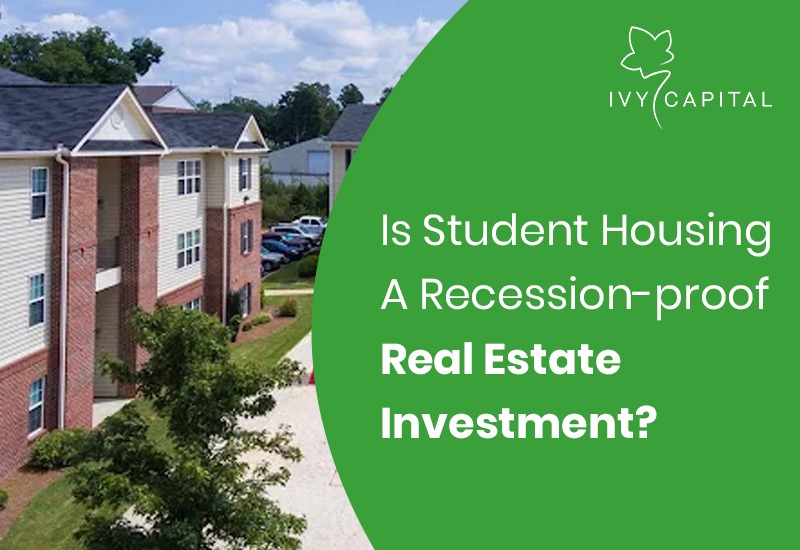
In unpredictable economic climates, investors often ask: Is there a segment of real estate that can hold up even when markets soften? Student housing geared toward college and university students is increasingly cited as one of the more resilient real estate asset classes. But is student housing truly recession-proof, or is that just investment lore?
The short answer: No major real estate category is entirely immune to recessionary pressures, yet student housing has shown strong resistance to downturns compared with many other segments. Here’s why.
Understanding Recession Resilience in Real Estate
When economists talk about “recession-proof” investments, they really mean recession-resilient assets that withstand economic downturns better than average. Nearly every real estate type experiences some impact during a recession, but a resilient sector maintains demand and income stability even when broader markets slow.
Student housing fits that description better than most for several reasons:
1. Demand Is Tied to Higher Education, Not Employment Cycles
One of the strongest recession buffers for student housing is the inherent demand tied to university enrollment. During recessionary periods, individuals often choose to continue or expand their education rather than enter a weak job market, which can improve or sustain enrollment levels. This trend was observed during the Great Recession of 2008, when college enrollments grew significantly.
In contrast, traditional rental markets (like multifamily) can be more sensitive to employment levels, corporate relocations, and broader consumer confidence.
2. Stable Occupancy and Leasing Fundamentals
Recent industry data shows that occupancy in U.S. student housing remains robust even amid wider real estate uncertainty:
- Average occupancy rates nationally were over 91% entering the 2025–2026 academic year, reflecting stable demand from students.
- Preleasing levels have consistently remained high, with many markets posting preleasing rates above 90%.
- Average asking rents per bed nationally reached around $1,017, with rent growth still positive year-over-year.
Strong leasing fundamentals mean predictable cash flows a hallmark of resilient real estate.
3. Supply Constraints Help Protect Income Streams
Unlike traditional multifamily housing, student housing faces barriers to rapid supply growth. Construction costs, zoning regulations, and land scarcity near major campuses limit the volume of new beds coming online.
With less new supply and steady enrollment, the sector avoids the severe oversupply pressures that can plague apartments or office spaces during economic slowdowns.
This constrained supply environment can cushion returns during downturns, keeping rents and occupancy healthier than the broader rental market.
4. Lease Structures Provide Income Visibility
Traditional apartments often have rolling month-to-month leases. Student housing typically operates under fixed academic year leases, giving operators more visibility into occupancy and revenue up to 12 months ahead of a downturn.
This forward revenue visibility is valuable during uncertain economic conditions because it reduces the cash-flow volatility that investors face in other real estate sectors.
5. Investment Activity Reflects Confidence, Not Blind Faith
Student housing isn’t recession-proof in the sense that it never feels downturn effects, but institutional and global capital flows reinforce confidence in the sector’s resiliency.
Real estate investment volumes in student housing have remained significant, and large institutional players continue to participate in major portfolio deals. While broader commercial real estate segments like office have faced valuation challenges, student housing continues to attract investment due to its fundamentals.
Where Student Housing Shows Relative Strength and Where It Doesn’t
Strengths:
- High occupancy rates and strong preleasing suggest consistent demand.
- Lease structures align with academic cycles, reducing unexpected vacancy.
- Limited new supply protects income fundamentals.
Risks:
- A downturn could impact discretionary spending (e.g., student living upgrades).
- Local market conditions matter; not all college towns perform equally.
- Interest rate environments and financing costs still impact deal flow.
No real estate asset is perfectly recession-proof, not offices, retail, senior housing, or student housing. But the characteristics above help student housing weather downturns better than many alternatives.
What Investors Should Consider in 2026
For investors evaluating student housing, here are key strategic points:
1. Focus on High-Demand University Markets
Tier-1 and strong public university markets typically show better enrollment trends and lease performance. These markets often sustain demand even under economic stress.
2. Prioritize Experienced Operators
Operational excellence is key in student housing. Hedge risks by partnering with teams who know leasing cycles, campus proximity benefits, and resident experience optimization.
3. Value Long-Term Fundamentals, Not Short-Term Gains
Resilience in student housing is a long-game strategy. Investors should emphasize consistent cash flow and occupancy stability over fast appreciation.
Conclusion: Resilient, Not Immune
Is student housing recession-proof? No investment is completely immune to economic cycles. But student housing has shown through multiple downturns, including the Great Recession and other market contractions, that it is among the more recession-resilient real estate asset classes. Strong demand drivers, supply limitations, and structured leasing help protect income and make it a compelling option for investors seeking durability in uncertain markets.
If you’re considering real estate investments with a focus on stability and predictable income, student housing deserves serious attention.
Interested in learning how student housing investing can fit into your portfolio strategy? Contact Ivy Capital today to explore opportunities in Southeast university markets and build resilient real estate income.